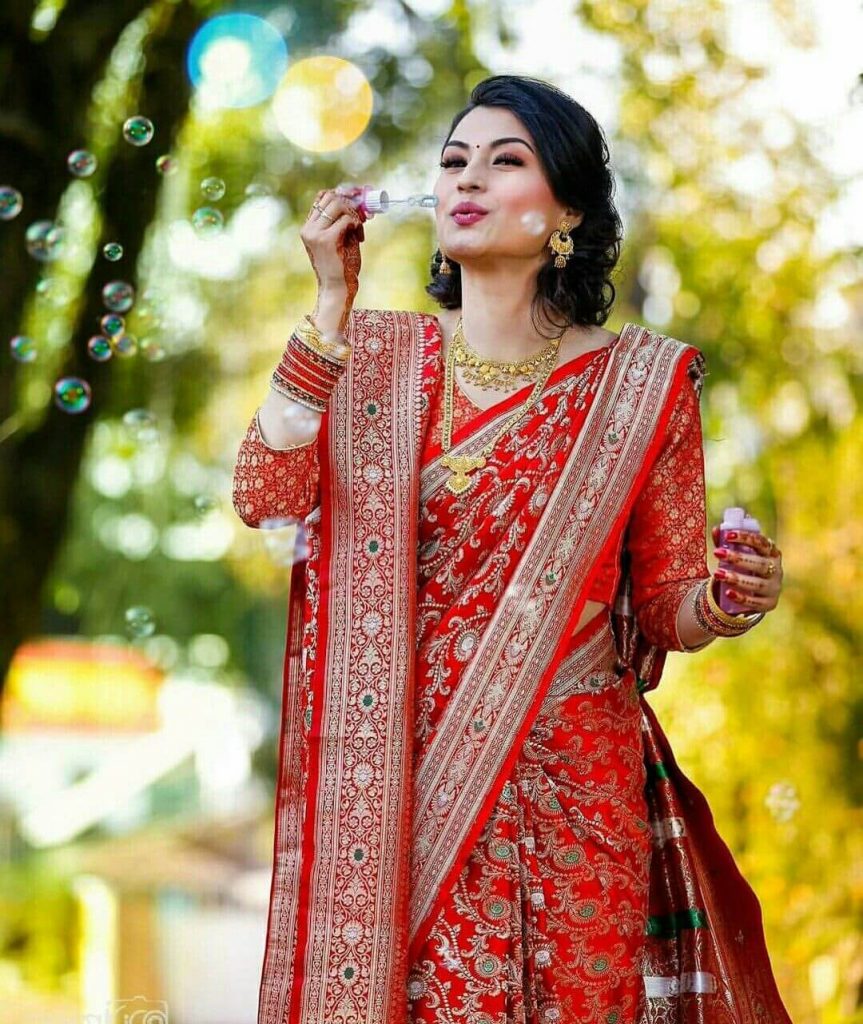
A wedding is a special occasion in the life of any woman, the one day where she would want her beauty and grace to shine out. This is why wedding dresses are designed to be the most stunning creations, no matter which culture you come from. Amongst Nepali/Indian brides, nothing can match the appeal of wedding sarees; these gorgeous, stylish garments combine the best of traditional beauty and modern poise.
However, Nepali/Indian wedding sarees are not limited to the resplendent bridal wedding sarees but also include the less rich, less ornate sarees for guests and members of the wedding party. In Nepali/Indian culture, a wedding is more than just a ceremony; it is a celebration for two families and the community.
The atmosphere is one of festivity and splendor and this is matched by the ornate designs on display in terms of clothes. This is why the saree is a popular choice not just for the brides, but for anybody attending the ceremony as well
1. Rich Texture & Heavily Embellished Sarees
When exploring an Nepali/Indian wedding saree collection, the one thing that leaps out is the variety of stunningly rich and beautiful designs and patterns.
The Nepali/Indian wedding sari is the perfect canvas for exhibiting the diverse styles of embroideries and embellishments from specific regions. Work such as Resham, zari or gold print may even be seen in ordinary sarees but glittering stone, sequins, cutdana, Kundan, crystals, gota patti, zardosi, Dabka, latkan, Parsi gara, booti, Kasab etc. would only be combined in the best wedding sarees.
Though natural motifs such as leafs, fruits, flowers, birds and animals are predominant, wedding saree designs can also include whole scenes, swirls and stylized abstractions. Whatever the type of motif, the design will typically be highly intricate, spreading all over the saree and lending the thick borders a glittering, heavy vibe.
2. Silk Sarees
The classic and most popular material that frequently turns up in wedding saree collections is silk. The advantage of silk is it is soft, comfortable and relatively light-weight while also having a luxurious look and feel. Though silk is the most preferred, other fabrics like crepe, georgette, chiffon, net, velvet, satin, tissue and brocade have their own appeal.
Low-cost fabrics like faux versions of chiffon, georgette and silk may also be used though never for designer wedding sarees. These are the height of luxury and often combine a lot of innovative silhouettes with traditional designs made by skilled artisans.